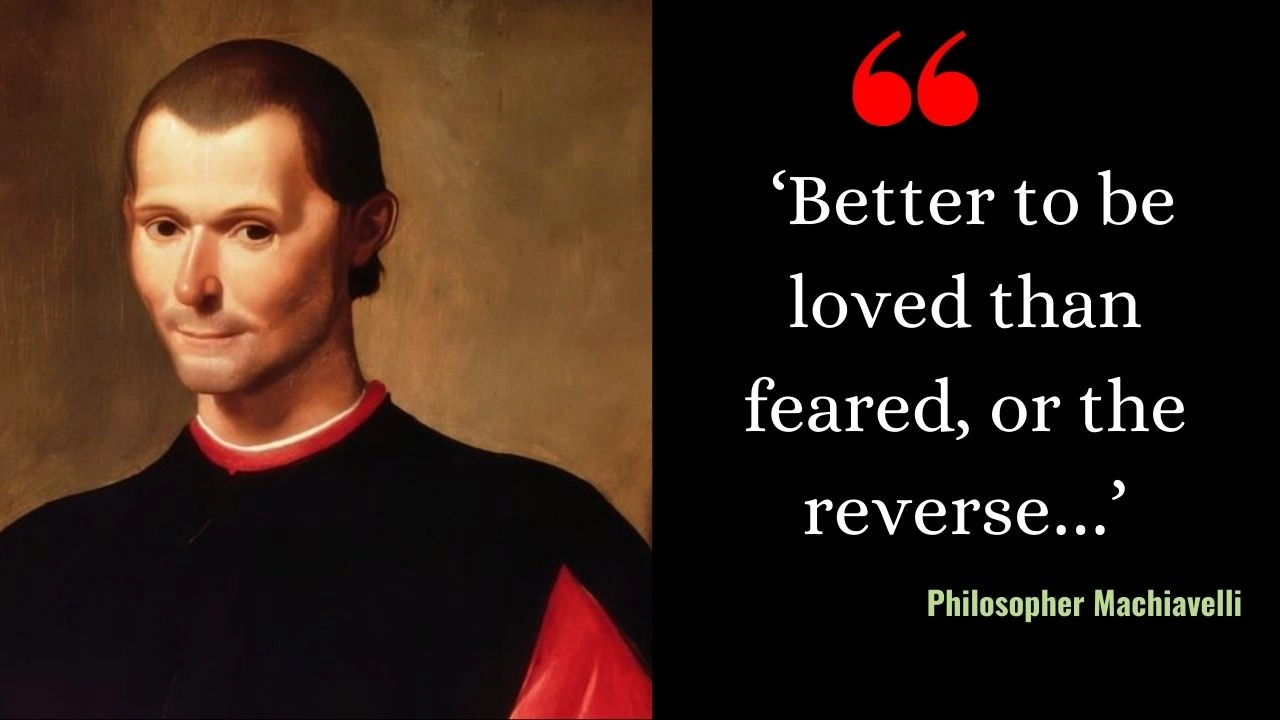
Quote of the Day from Philosopher Machiavelli has become one of the most debated ideas in leadership and political history. Even today, people still stop and think when they hear this bold question about love, fear, and real power. The quote challenges readers to look closely at human behavior and the nature of authority. It also encourages leaders to think about what truly keeps people loyal and what keeps a nation stable during uncertain times.
In this article, the focus keyword Quote of the Day from Philosopher Machiavelli will guide the discussion as we explore where this idea came from, why it matters, and how it still influences leadership today. You will get a clear and simple explanation of Machiavelli’s thinking, along with a look at his life, his ideas about power, and the lessons leaders continue to draw from his work.
Quote of the Day from Philosopher Machiavelli
The meaning behind the famous Quote of the Day from Philosopher Machiavelli explains why it still stands out today. Machiavelli wrote The Prince during a time of chaos in Florence, where political shifts and foreign threats were common. His words were shaped by direct experience with rulers who succeeded through strategy and discipline. When he argued that fear provides stronger security than love, he was speaking from observation rather than theory.
Modern leadership studies often revisit this quote because it introduces a timeless question. Is it better for a leader to inspire affection or to command authority? Machiavelli suggested that love can change when times get hard, but fear stays steady as long as it is used wisely. This is one reason the quote remains a powerful guide for leaders in both political and business environments. It reflects the ongoing tension between kindness, control, and the need for stability in uncertain times.
Overview Table
| Topic | Key Points |
| Source of Quote | Appears in Chapter 17 of The Prince |
| Central Question | Is it better to be loved or feared as a leader |
| Machiavelli’s Answer | Fear offers stronger security than love |
| Leadership Style | Direct, strategic, focused on stability |
| View of Human Nature | People change loyalty in difficult times |
| Influence on Politics | Basis for classical realist thinking |
| Influence on Leadership | Shows how fear and respect shape authority |
| Historical Context | Written during instability in Florence |
| Key Example | Cesare Borgia’s harsh but effective rule |
| Ongoing Impact | Still taught in universities and leadership programs |
The First National Security Advisor
Some scholars refer to Machiavelli as an early form of a national security advisor because his approach to leadership focused heavily on protection, control, and survival. He understood that a leader has responsibilities that go far beyond personal reputation. His guidance in The Prince was built on real political events rather than philosophy alone. He saw firsthand how weak leadership could lead to internal collapse, foreign invasion, or sudden rebellion.
His belief was that leaders must make choices that keep the state secure, even if those choices are not admired by everyone. This idea fits closely with modern national security thinking, where the safety of the people and the strength of the government come before popularity. This practical mindset is one reason his work continues to be studied by politicians, diplomats, and military leaders.
A Classical Realist
Machiavelli is often described as a classical realist because he believed power is the central force in politics. According to this view, leaders must always be aware of threats, understand the limits of trust, and act in ways that protect the state. He argued that love is valuable but not reliable, especially when people feel pressured or afraid.
Fear, when applied fairly, creates a stable foundation because it discourages rebellion and encourages obedience. His approach may seem harsh, but it reflects a practical understanding of how people behave when faced with danger or uncertainty. This realistic view continues to influence international relations, political science, and leadership studies today.
The Anti-Confucius
Machiavelli’s ideas contrast strongly with the teachings of Confucius, who believed that rulers should lead through moral character and virtue. Machiavelli did not deny the value of virtue, but he argued that morality alone is not enough to secure a state. He believed that power requires discipline, careful planning, and sometimes firm action.
This comparison helps readers understand how different cultures and eras developed contrasting ideas about leadership. Machiavelli viewed the world as unpredictable and competitive, which shaped his belief that strength and control are essential. His quote about love and fear captures this difference clearly and shows how leaders must sometimes make difficult choices to preserve stability.
Anarchical System of Foreign Affairs
Machiavelli believed that the world operates without a single authority that controls every nation. This means each state must protect its own interests and make decisions based on survival rather than shared morality. He observed that alliances could shift quickly and that trust between states was fragile.
This belief shaped his advice for rulers. He encouraged them to prepare strong armies, understand their rivals, and avoid depending too much on external partners. His explanation of anarchy in global affairs continues to shape modern political thought and helps readers understand why nations often act in competitive ways.
Evil Could Be Part of Power
One of Machiavelli’s most controversial ideas is that cruelty or harshness may sometimes be necessary for leadership. He believed that people can become disloyal when conditions change, so a leader must take actions that secure obedience. To him, controlled fear was more dependable than affection, especially during crisis.
This does not mean he supported unnecessary violence. Instead, he believed that firm decisions made for the sake of stability could prevent larger problems later. This idea explains why his quote about fear remains influential. It highlights the difficult balance leaders face when they try to protect their people and their authority at the same time.
A Brief Biography
Machiavelli was born in Florence in 1469 to a family that valued education. He learned Latin and rhetoric from his tutor Paolo da Ronciglione, skills that shaped his writing style and helped him gain early roles in government. His ability to observe and analyze political events became one of his greatest strengths.
He began his career writing official documents and studying how leaders handled conflict. These early experiences introduced him to the realities of power and politics, preparing him for the more influential roles he would gain later in life.
First Real Position of Influence
Machiavelli’s major rise came when he became secretary of the Florentine council responsible for diplomacy and defense. This position allowed him to watch powerful figures up close, including Cesare Borgia, who became one of the strongest influences on his writing. Borgia ruled with strict authority and was known for quick, decisive action.
Machiavelli saw how Borgia used firmness to crush rebellion and secure loyalty. These observations shaped his belief that leaders must act in their own interest to remain in control.
The Power Behind the Pope
During his time as a diplomat, Machiavelli observed how leaders within the Holy See made decisions and maintained their positions. He learned how strategy, alliances, and political pressure shaped leadership at the highest levels. These lessons helped him understand what keeps a leader in power and what causes a leader to fall.
A General With a Mixed Record
Machiavelli also experimented with military leadership by raising a militia made of citizen soldiers. He believed they would defend Florence with greater loyalty than hired mercenaries. Although his militia succeeded in taking Pisa, they later fell to the Medici family, who returned to power with strong outside support.
This defeat changed his career and eventually led him into temporary exile, where he wrote The Prince and shaped many of the ideas that make him famous today.
His Legacy Is Intact
Machiavelli’s work continues to be read in universities, leadership programs, and political discussions around the world. His quote about being loved or feared appears in books, films, and debates about leadership because it captures a truth that many leaders still face. His ideas endure because they reflect real human behavior and real political experience.
FAQs
Why is Machiavelli’s quote still important today
It remains important because leaders still struggle with balancing kindness and authority. His idea explains why stability often requires difficult choices.
Did Machiavelli believe fear was always better than love
No. He believed both were ideal together, but if forced to choose, fear created stronger security because people are less likely to rebel.
What shaped Machiavelli’s views on leadership
His diplomatic roles, military work, and observation of rulers like Cesare Borgia helped him understand the realities of power.

Is The Prince still relevant for modern leaders
Yes. Many strategic principles in business, politics, and international relations reflect ideas Machiavelli wrote about centuries ago.