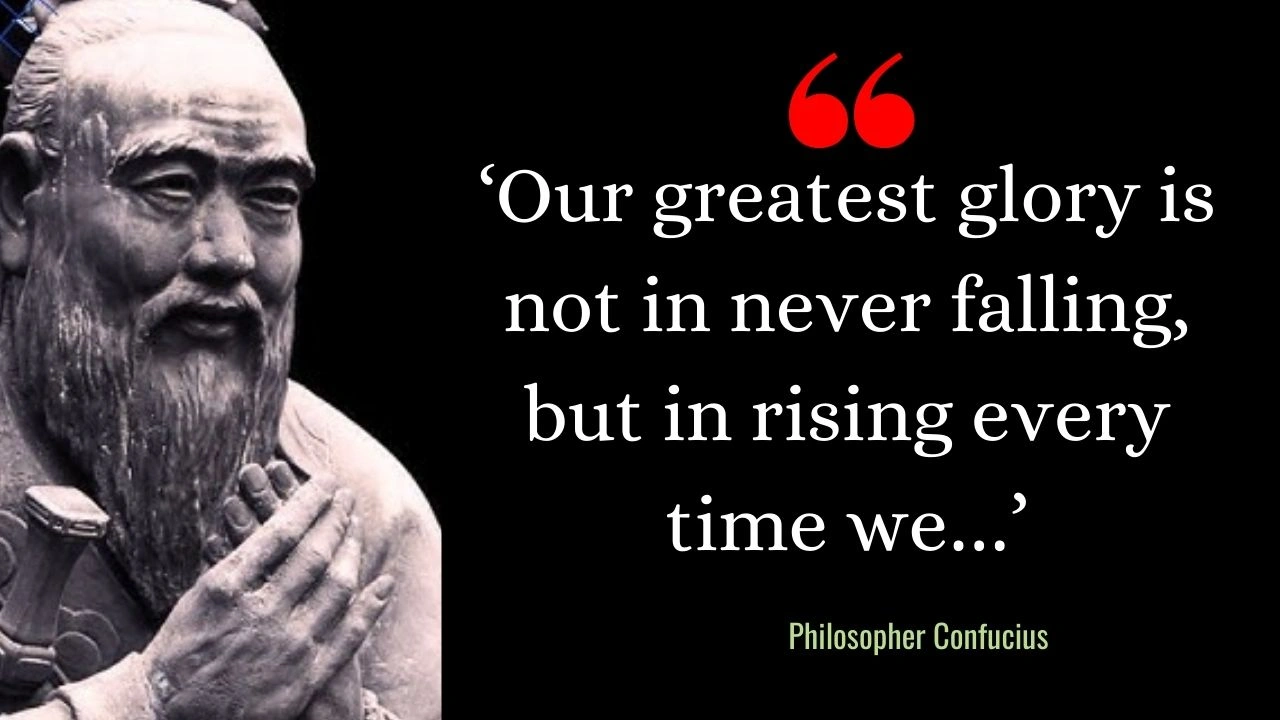
Quote of the Day from Philosopher Confucius has become a familiar source of daily inspiration for readers who look for simple but powerful life lessons. The line about rising after every fall captures a universal truth about strength and personal growth. Even though this popular saying is not confirmed to be from Confucius himself, the message reflects the spirit of resilience that people associate with his teachings. Many readers feel drawn to this idea because it reminds them that progress depends on effort, patience, and the willingness to begin again.
In this article, you will see how Quote of the Day from Philosopher Confucius connects with his deeper teachings on self improvement, reflection, and balanced thinking. The goal is to explore what the reference quote represents, why it remains meaningful today, and how Confucius’s philosophy continues to guide modern leadership, emotional intelligence, and daily life. This guide offers a simple and accessible overview that gives you a clear understanding before we move into the more detailed sections.
Quote of the Day from Philosopher Confucius
This section gives a short and clear explanation of the meaning behind this widely known line. Even though it may not appear in Confucius’s original texts, the idea aligns with his belief that individuals grow through steady progress and thoughtful correction. The quote suggests that value comes not from perfection but from the courage to rise each time life becomes difficult. Confucius taught that true strength is emotional steadiness, patience, and a willingness to refine one’s character. This approach matches today’s interest in resilience, mindful habits, and positive daily routines. It also supports modern ideas about emotional intelligence and leadership in a world that rewards long term consistency more than quick wins.
Overview Table
| Key Point | Summary |
| Quote meaning | Rising after every fall matters more than never failing |
| Misattribution | Many quotes linked to Confucius do not come from his original texts |
| Historical influence | Confucius shaped thought in Asia and inspired Western thinkers |
| Focus on growth | Improvement comes from steady daily actions |
| Role of respect | Respect begins with inner dignity and personal conduct |
| Idea of noble person | Calmness and steady thinking define strong character |
| Learning approach | Study must be paired with reflection for balanced wisdom |
| Emotional intelligence | Confucius valued emotional control and thoughtful behavior |
| Modern leadership | His teachings support trust, stability, and strong values |
| Social harmony | Self reflection builds better communities and relationships |
Beyond IQ: Why Confucius’s 2,500 Year Old Guide to Noble Leadership Is Still the Gold Standard
Confucius remains a central figure in Chinese history because he created a thoughtful system that blends personal discipline with moral responsibility. His teachings shaped generations of students, leaders, and scholars. Even today, people quote his lessons to help guide decisions and build stronger habits. While his ideas are ancient, they feel surprisingly modern because they focus on emotional steadiness, patience, respectful communication, and clear thinking. These qualities form the base of effective leadership and personal growth.

Modern readers connect with his belief that improvement does not come from sudden change. It arrives through steady practice. In a time where quick results are valued, this message encourages people to slow down and work on long term goals. This is why the focus keyword, Quote of the Day from Philosopher Confucius, continues to appear in conversations about self development and wisdom.
The Misattributed Quote and Its Real Meaning
The saying about rising after each fall is often shared online as a motivational message. While many believe Confucius wrote it, scholars point out that it does not appear in The Analects. Still, the idea strongly fits his views on learning from mistakes. Confucius taught that no one reaches excellence without correction. Every individual grows through reflection, small steps, and a commitment to improve one’s character. This makes the message relevant even if its origin is uncertain.
What matters most is the idea behind the words. The quote encourages readers to accept mistakes as part of the journey. This creates a mindset that values progress instead of perfection, something that aligns closely with Confucius’s deeper philosophy.
The Man Who Moves a Mountain Begins by Carrying Away Small Stones
One of the most repeated ideas associated with Confucius describes growth through tiny steps. Even if the exact wording may not be his, the message reflects his belief that great change comes from small actions performed over time. Confucius taught that steady effort shapes character in a way that sudden bursts of motivation cannot. Today we see this idea in habit research, personal development strategies, and productivity studies that focus on micro improvements.

This perspective helps individuals understand that progress is not made through dramatic gestures. It is built through simple tasks completed consistently. When applied to daily routines, this principle helps people achieve goals that once felt impossible.
Cultivate in Yourself Respectful Attentiveness
Confucius spoke often about the importance of respect, but he always began with the inner self. Respect is not only about polite behavior. It is a deeper form of attentiveness that shapes how individuals interact with the world. He believed that people who hold themselves with dignity naturally treat others with fairness and kindness. Leaders who embody this value inspire trust through their behavior rather than through their authority.
In relationships and communities, respectful attentiveness leads to harmony. When people understand their own worth, they communicate clearly, act consistently, and build trust with others. This is an essential part of Confucius’s larger view of moral society.
The Noble Minded Are Calm and Steady. Little People Are Forever Fussing and Fretting.
Confucius often compared the noble minded person with the small minded person. The noble minded individual stays calm and steady because they act from principle, not impulse. The small minded person reacts emotionally and becomes distracted by minor concerns. Confucius did not connect nobility to birth or status. It came from character, discipline, and emotional steadiness.

This idea helps readers understand why calm leadership is so powerful. People trust individuals who remain steady under pressure. This teaching connects directly to today’s interest in emotional intelligence and stability in leadership roles.
Learning Without Thinking Is Useless. Thinking Without Learning Is Dangerous.
Confucius offered one of the earliest explanations of balanced learning. He believed knowledge without reflection creates shallow understanding, while thinking without study creates confusion. His teaching encourages students to question, review, and consider how their learning fits into real life. This approach forms the base of critical thinking.
Many modern education systems follow this same model. Confucius understood that learning is a cycle. Individuals study, reflect, adjust, and continue the cycle with clearer understanding. This keeps knowledge grounded and meaningful.
When We See Men of Virtue, We Should Think of Equaling Them; When We See Men of Opposite Character, We Should Turn Inward and Examine Ourselves
This teaching captures Confucius’s focus on self reflection. When individuals see good behavior, they should try to match it. When they see poor behavior, they should look inward before judging. This creates a balance of humility and aspiration. Instead of reacting with anger or criticism, people learn from what they witness.

In a world shaped by strong opinions and fast reactions, this message supports thoughtful behavior. Confucius believed that personal responsibility begins with the self, not with pointing out the failures of others.
FAQs
Why is this Confucius quote shared so widely today?
People share it because it gives simple motivation and encourages resilience during difficult moments.
Is the quote actually written by Confucius?
The quote is not found in his recorded works, but it reflects the spirit of his teachings on perseverance.
Why do many sayings get linked to Confucius even when they are not his?
His name became a symbol of wisdom, so many proverbs were later attached to him.

What is the main lesson behind his real teachings?
His real focus is on character, self reflection, steady growth, and respectful behavior.
Why do modern readers still study Confucius?
His ideas match today’s needs for emotional balance, leadership skills, and long term personal development.