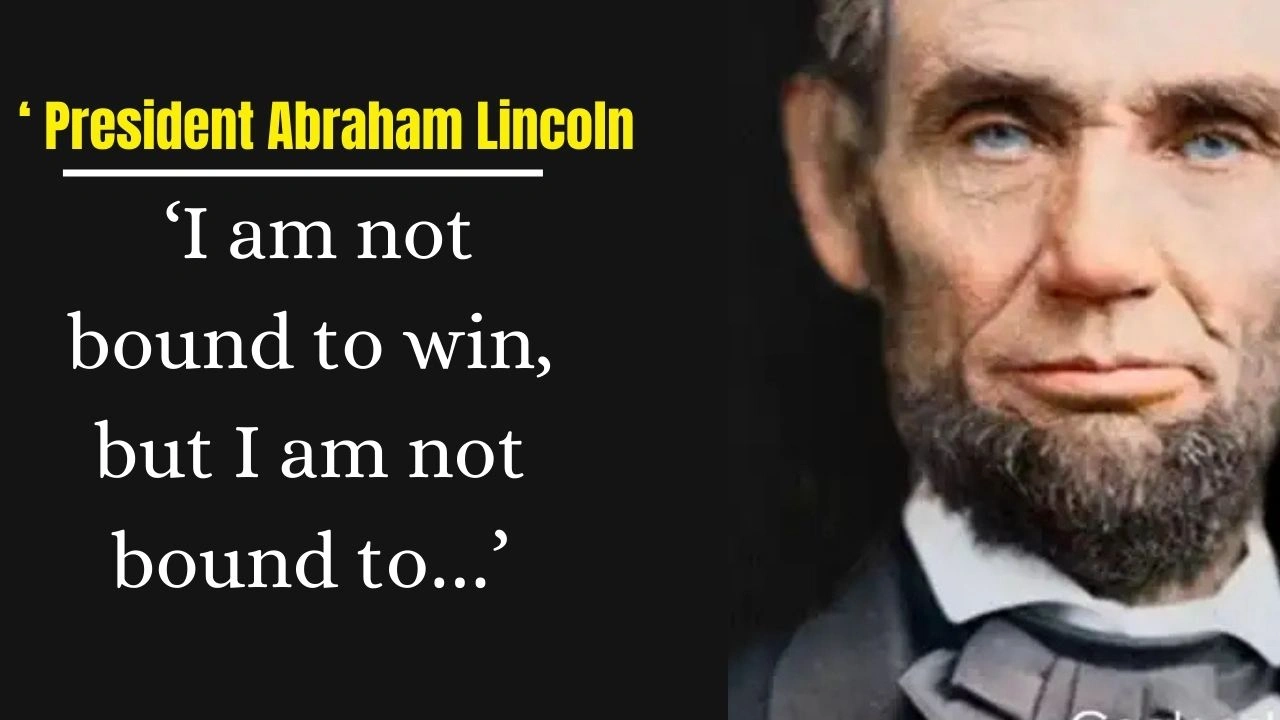
Quote of the Day by President Abraham Lincoln has become one of the most shared inspirational lines online, especially because the words feel honest and motivating. Many readers repeat it because it captures a sense of integrity that people often associate with Lincoln. The line “I am not bound to win, but I am bound to be true” sounds like something he would say, which is why it spreads so easily. As this quote continues to circulate, it pulls more people into the long and fascinating story of how certain words become linked to major historical figures.
In this article, I will break down how the Quote of the Day by President Abraham Lincoln became so popular, why it has been misattributed for years and how it ended up in speeches by several United States presidents. You will also get a clear look at how the misquote developed, the real history behind Lincoln’s spoken words and what we can learn from the way powerful quotes move through culture.
Quote of the Day by President Abraham Lincoln
The focus keyword Quote of the Day by President Abraham Lincoln often appears in motivational posts, political speeches and daily inspiration platforms. Even though this popular quote does not have any confirmed historical source, it continues to influence public conversations because it feels emotionally strong and morally grounded. Many leaders, readers and everyday users share it as a reminder that honesty matters more than winning. This section explains why the quote has been used for decades, how it became linked to Lincoln without evidence and what keeps it alive in modern discussions. It also sets the stage for exploring how misquoting famous leaders has become a common pattern, especially in a time when information spreads quickly.
Overview Table
| Topic | Key Information |
| Origin of the quote | No verified connection to Lincoln exists |
| Quote popularity | Widely shared across speeches and online platforms |
| First major modern user | Barack Obama referenced it publicly |
| Repeated by other leaders | Ronald Reagan quoted it several times |
| How misquotes spread | Repetition in print and speeches creates false credibility |
| Example of other false Lincoln quotes | Several well known lines were traced to other writers |
| Lincoln and public memory | People associate inspiring messages with him |
| Historical context | Lincoln’s final year was filled with major national events |
| Media influence | Articles and reports highlighted the misquote trend |
| Purpose of this article | To clarify history and explain how misquoting happens |
History of a Misquote
The story behind this misattributed line begins with a simple mistake. A writer printed the quote with Lincoln’s name, and readers accepted it without checking any historical documents. Once a quote appears in print, it gains authority, which helps it spread faster. Scholars who study political language note that Lincoln is one of the most frequently misquoted presidents in American history. This happens because people want to associate strong moral messages with someone they respect deeply. As a result, words that feel meaningful often get attached to Lincoln even when there is no proof.
How Presidents Helped Spread the Quote
The misquote became even more widespread when President Barack Obama used it in 2010 while speaking to lawmakers before the Affordable Care Act vote. He said he came across the quote while reading earlier presidential writings, not realizing it was inaccurate. Ronald Reagan had used the same quote years earlier, which likely influenced later speechwriters. When a president repeats a line, people naturally assume it must be real, and this helped push the quote into the public consciousness. Over time, it became one of the most repeated lines credited to Lincoln, even though historians have confirmed that there is no record of him ever saying it.
Misquoting Lincoln Through the Years
Lincoln has been misquoted many times, long before the digital age. One false quote about corporations taking control of the country was exposed in the late 1800s by Lincoln’s own secretary. Another popular line about fooling the public actually came from politician William J. Groo. These misquotes show how easily people accept statements that match their expectations of a historical figure. When a message feels wise or powerful, attaching it to Lincoln strengthens its impact, and this cycle continues year after year.
Lincoln’s Last Year
While the misquotes draw plenty of attention, Lincoln’s final year in office offers many verified moments of leadership. Between 1864 and 1865, he guided the country through monumental changes. He wrote to Albert G. Hodges explaining how his understanding of emancipation evolved. He supported the Senate’s vote to pass the 13th Amendment and signed a law repealing the Fugitive Slave Act. He also defended the importance of Black soldiers to the Union army, stating that losing their service would end the war within weeks. Nevada became a state during this period, and Lincoln won a second term. These confirmed events show the depth of his real words and actions.
The Legacy of Abraham Lincoln
In early 1865, Lincoln submitted the 13th Amendment to the states and established the Bureau for the Relief of Freedmen and Refugees. His second inaugural address remains one of the most memorable speeches in American history, focusing on healing and unity. Shortly after the Civil War ended, Lincoln delivered his final public remarks. Days later, he was assassinated, closing a significant chapter in American leadership. His legacy continues to inspire millions, which is why so many people want meaningful quotes to belong to him even when the historical record does not support it.
Key Points to Remember
- The Quote of the Day by President Abraham Lincoln has no verified historical source.
- Modern presidents helped spread it unintentionally.
- Lincoln is one of the most frequently misquoted leaders in history.
- Misquotes spread because they feel emotionally true, even without evidence.
- Lincoln’s real speeches show more depth than the false lines often linked to him.
FAQs
Why is this famous quote linked to Abraham Lincoln if he never said it?
People attached the quote to him because it sounds like something he would say, and the line gained trust once it appeared in print.
Did any presidents use this incorrect quote in official speeches?
Yes. Barack Obama and Ronald Reagan both used it, which helped make it even more widely accepted.
Is Lincoln often misquoted in public discussions?
Yes. Many popular quotes credited to him were proven false by historians.
Why do misquotes spread so easily?
Once a quote is repeated by respected speakers or printed in trusted sources, people believe it must be accurate.
What can readers learn from this?
It is important to check historical sources before assuming a quote is real, especially when it is tied to a major figure.