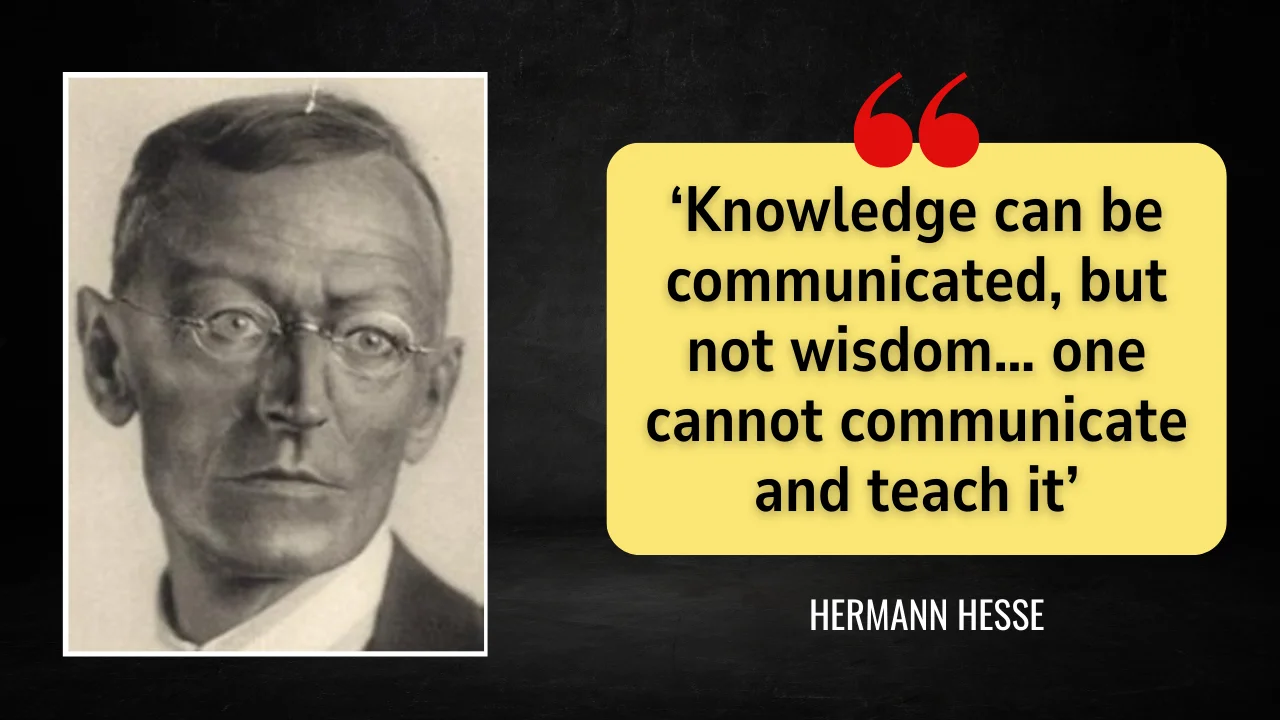
Quote of the Day by Hermann Hesse: Quote of the Day by Hermann Hesse has a way of stopping readers in their tracks because it shines a light on something we often forget. We spend years gathering facts, learning from books, and listening to teachers, yet real understanding comes from personal experience. This powerful line makes us think about how we grow as individuals and how wisdom develops within us over time. The depth of this quote connects with anyone who has discovered that life lessons cannot be handed over like notes in a classroom.
In this article, we explore the meaning behind the Quote of the Day by Hermann Hesse, why it remains relevant today, and how it reflects the themes found in his well-loved works. We also look at how he separates knowledge from wisdom, why his writings still inspire people across the world, and how this quote continues to guide readers searching for clarity and inner growth.
Quote of the Day by Hermann Hesse
The Quote of the Day by Hermann Hesse is more than a simple reflection. It is a doorway into understanding the difference between learning something and truly knowing it. Hesse suggests that knowledge can be passed from person to person, but wisdom is deeply personal. A person can read every book in the world, but until they live through real moments, face struggles, and grow from them, the deeper truth stays out of reach. This idea appears again and again in Hesse’s writing, especially in his famous novel Siddhartha, where the main character learns that no teaching can replace his own journey. This quote reminds readers that personal discovery is the heart of real learning and that wisdom grows only when life itself becomes the teacher.

Overview Table
| Key Point | Summary |
| Main Quote | Knowledge can be shared, but wisdom must be lived |
| Author | Hermann Hesse |
| Core Theme | Difference between knowledge and wisdom |
| Related Book | Siddhartha |
| Message Focus | Personal experience over instruction |
| Writing Style | Reflective and spiritual themes |
| Nobel Prize | Awarded in 1946 for Literature |
| Influences | Eastern philosophy and Western thought |
| Reader Impact | Encourages self-discovery |
| Modern Relevance | Helps readers understand inner growth |
Meaning of the quote
Hermann Hesse’s quote explains a simple truth that many people come to understand only after years of living. Knowledge is easy to pass along. Anyone can teach information, facts, or theories. You can gather knowledge from books, teachers, or classes. It is something that can be explained clearly and repeated exactly from one person to another. Wisdom does not work the same way. Wisdom grows inside a person through their lived experience. When you face challenges, make choices, learn from mistakes, and reflect on your life, you begin to build your own wisdom. Hesse believed that even the best teachers cannot give you their wisdom because it is shaped by their own life, not yours. This idea fits deeply with his writing style, which often invites readers to look inward and trust their personal journey.
Hermann Hesse quotes
Hermann Hesse wrote many lines that encourage people to think slowly and look within themselves. His quotes often capture deep ideas in simple words. Readers connect with them because they speak to real emotions and everyday struggles. One of his well-known quotes points out that sometimes letting go shows more strength than holding on. Another quote highlights that patience can be more powerful than cleverness. These ideas remind readers that wisdom takes time. Hesse’s words guide people to trust the quiet lessons that come from reflection. His writing gently encourages readers to find their own path rather than follow someone else’s instructions. These quotes continue to inspire because they speak to the universal journey of learning who we are and what truly matters.
Other popular quotes by Hermann Hesse
Hesse wrote many memorable lines that have stayed with readers for years. Here are a few of his most recognized ideas:

• Some people think that holding on makes them strong, but real strength can come from letting go.
• Writing is good, but thinking can be better. Cleverness is good, but patience often brings greater rewards.
• People are not meant to become each other. Instead, we are meant to see and honor who the other person truly is.
• The bird fighting its way out of the egg teaches that growth requires breaking old limits.
These quotes show the themes he often wrote about, such as personal transformation, patience, self-understanding, and the courage to grow. His messages continue to speak to readers who are searching for clarity and meaning in their own lives.
About Hermann Hesse
Hermann Hesse was a German Swiss writer, poet, and painter known for exploring the inner life of human beings. Born in Calw, Germany, he grew up surrounded by religious thought and cultural influences from both the West and the East. These early experiences helped shape the spiritual and philosophical themes in his later work. Hesse did not easily fit into the strict schools he attended, but he always felt a strong desire to write. His early success with the novel Peter Camenzind allowed him to devote his life to literature.

Later, Hesse moved to Switzerland and eventually became a Swiss citizen. He openly resisted growing nationalism in Germany during World War I and the Nazi era, choosing instead to focus on human values and individual freedom. His most famous books include Siddhartha, Demian, Steppenwolf, and The Glass Bead Game, the last of which won him the Nobel Prize in Literature in 1946. His writing continues to influence readers worldwide because it explores themes of inner peace, self-discovery, and the search for meaning that never lose relevance.
FAQs
1. What is the main message of the Quote of the Day by Hermann Hesse?
The message is that knowledge can be shared with others, but wisdom must be gained through personal experience. Nobody can teach you the deeper understanding that life gives through real moments.
2. Why does Hermann Hesse separate knowledge from wisdom?
He believed that wisdom grows only from living, reflecting, and learning through your own journey. This idea appears in many of his books, where characters learn through experience rather than instruction.

3. Which book by Hesse best reflects this idea?
Siddhartha is the clearest example. The character learns that no teaching can replace the lessons that come from walking his own path.
4. Why is this quote still meaningful today?
People continue to search for personal growth and clarity. Hesse’s quote reminds readers that real understanding cannot be rushed and cannot be handed to them by someone else.
5. How does this quote help readers in everyday life?
It encourages people to trust their personal experiences and understand that wisdom develops slowly through living, not through memorizing information.