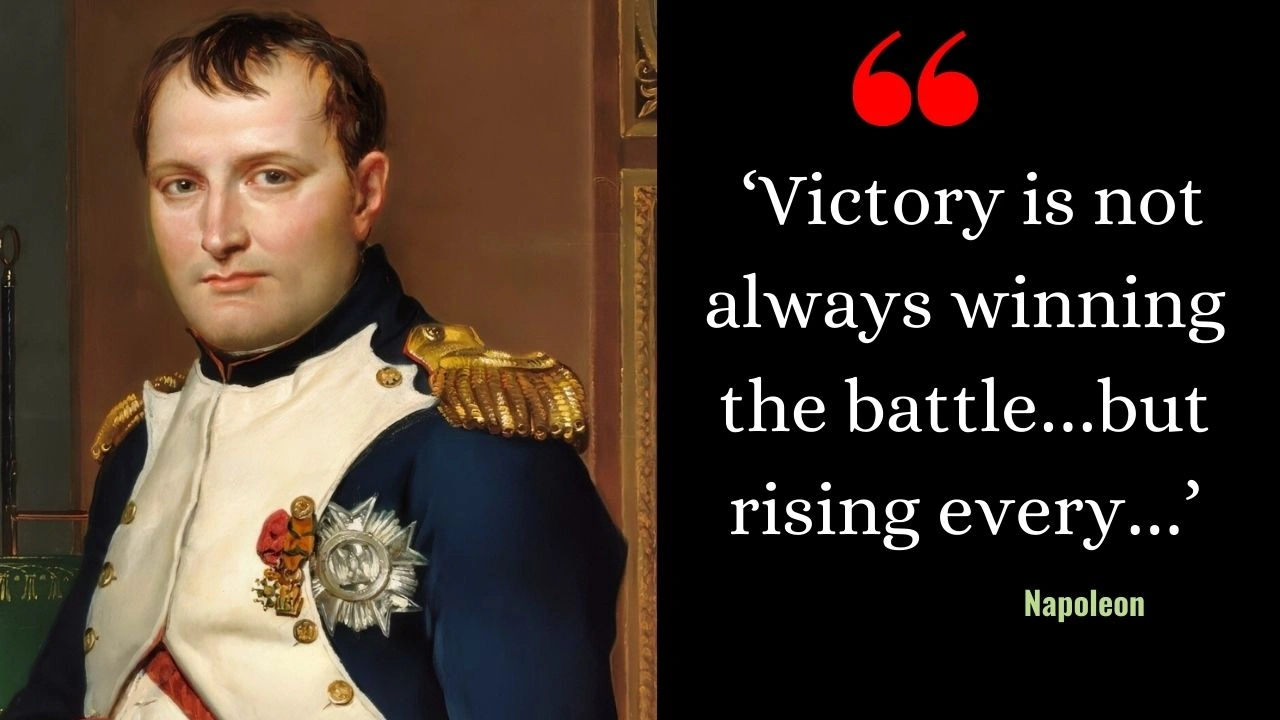
Military Quote of the Day By Napoleon carries a powerful message that speaks to anyone who has ever faced a setback. The quote reminds us that victory is not defined by a single moment. It is shaped by the courage to rise again when things fall apart. Napoleon Bonaparte understood this better than most leaders in history, because he lived through wins, losses, and moments when everything seemed impossible. His insight still inspires people today, from students to professionals to military thinkers.
This article explores how Napoleon lived the meaning behind this quote. You will learn how he handled the fog of war, why resilience shaped his success, and how major battles like Marengo and Leipzig reflect the heart of his message. The Military Quote of the Day By Napoleon stands as a reminder that falling is expected, but rising again is where true victory begins.
Military Quote of the Day By Napoleon: Strength Behind the Words
This section takes you deeper into the real meaning behind Napoleon’s statement. His quote is more than a motivational message. It comes from a lifetime of fighting, regrouping, and refusing to stay down even when defeat seemed certain. Napoleon believed that leadership was tested in hard moments, not easy ones. His mindset helped him rebuild after battlefield losses, inspire shaken soldiers, and find opportunities in the middle of chaos. Whether you are studying leadership, motivation, or military history, the Military Quote of the Day By Napoleon offers a clear lesson about patience, resilience, and the will to rise again.

Overview Table: Key Insights From Napoleon’s Journey
| Key Point | Summary |
| Meaning of the Quote | Victory comes from getting back up after every fall. |
| Napoleon’s Mindset | Resilience and adaptation shaped his leadership. |
| Fog of War | Uncertainty, fear, and weather often changed battles. |
| Importance of Recovery | Learning from losses mattered more than perfect plans. |
| Battle of Marengo | A near defeat turned into a powerful comeback victory. |
| Role of General Desaix | His return to the fight helped save the French position. |
| Battle of Leipzig | A major defeat that shifted Napoleon’s power downward. |
| Bridge Disaster | A premature explosion trapped thousands of French troops. |
| Exile to Elba | Napoleon faced a forced break after losing Paris. |
| One Hundred Days | His dramatic return showed his unmatched resilience. |
The Fog of War Did Not Blind Bonaparte
Napoleon understood that even the smartest strategy could fall apart on a real battlefield. The fog of war made everything unpredictable. Weather could halt an army for days, supplies might not reach the front lines, and commanders could misjudge the situation. Soldiers might panic at the wrong moment, and enemy forces could appear where they were least expected. Napoleon accepted these realities as part of every campaign. His strength came from adjusting quickly instead of panicking. He believed a leader should stay calm when things go wrong, because that is when troops look for direction. His belief in rising after setbacks became the core of his leadership style.
Bonaparte Could Take a Beating and Still Recover
Napoleon was known for chasing decisive victories, but history shows he was just as skilled at rebuilding after a defeat. He studied his mistakes carefully and used them to shape new strategies. His soldiers saw him regroup, refocus, and return stronger after difficult battles. This encouraged them to stay determined even when the situation felt hopeless. Napoleon believed that an army could grow more from a loss than from an easy win. He treated every setback as a chance to improve coordination, training, and morale. This resilience helped him keep momentum through several tough campaigns.
Turning Adversity Into Victory
One of Napoleon’s greatest talents was finding opportunity in chaos. He did not freeze when things went wrong. Instead, he trusted his instincts and rallied his commanders to act fast. Many of his early victories came from moments when defeat seemed close. His leadership showed his officers that no situation was final unless they accepted it. This way of thinking shaped the message of his famous quote. Rising again after falling was not optional for Napoleon. It was the foundation of every comeback he engineered.

Battle of Marengo
The Battle of Marengo in 1800 is one of Napoleon’s most famous comeback moments. At the start of the fight, Austrian forces struck the French unexpectedly and pushed them back hard. Napoleon’s troops scattered, and the odds looked terrible. Instead of letting panic spread, Napoleon quickly organized a controlled retreat. This move gave his soldiers breathing room and time to reform. General Louis Desaix, who had been away, returned at the perfect moment. He led his men straight into the fight with strong determination, surprising the Austrians who thought the French were finished. Napoleon reinforced this push, broke the Austrian line, and turned a near loss into a celebrated victory. Marengo became proof of Napoleon’s belief in rising after a fall.
Battle Of Leipzig
The Battle of Leipzig in 1813 told a different story. Here Napoleon faced 185,000 French troops against a coalition of about 320,000 allied soldiers. He had already faced setbacks from earlier campaigns, and this time the odds were too strong. Allied forces attacked repeatedly and pushed the French back toward Leipzig. Napoleon ordered a retreat, and the plan was working until a devastating mistake occurred. A frightened French corporal blew up the only bridge too early. This left thousands of French troops trapped on the wrong side and led to heavy casualties. It was one of Napoleon’s worst defeats, marking the beginning of the fall of his empire. Still, even this loss did not break his willingness to rise again.
On the Comeback Trail from Banishment
After Leipzig, Napoleon was forced to retreat to France. Eventually Paris fell, and he was sent to the island of Elba. Most leaders would have ended their story there, but Napoleon was different. He planned his return carefully and escaped Elba to reclaim his position in France. His soldiers welcomed him back, showing how much they trusted his leadership. This dramatic moment became known as the One Hundred Days. While Napoleon later faced his final defeat at Waterloo, his return from exile showed the true meaning of his quote. Rising again was part of who he was, even when the world expected him to stay down.

Two Key Lessons From Napoleon’s Military Mindset
- Resilience Can Change Any Outcome
Comebacks happen when leaders stay calm and focused after setbacks. - True Leadership Appears in Hard Moments
Napoleon earned loyalty by showing strength during the toughest situations.
FAQs
Why is the Military Quote of the Day By Napoleon still popular today
People connect with it because it speaks to resilience, strength, and learning from setbacks.
Did Napoleon always recover after defeat
Not every time, but he often found ways to rebuild and return stronger than before.
Which battle best shows the meaning of this quote
The Battle of Marengo, because Napoleon turned a near loss into a powerful victory.

Why did Napoleon lose the Battle of Leipzig
He was outnumbered, and a critical bridge mistake trapped thousands of his troops.
Does this quote apply outside of military history
Yes, it encourages anyone facing challenges to rise again and keep moving forward.