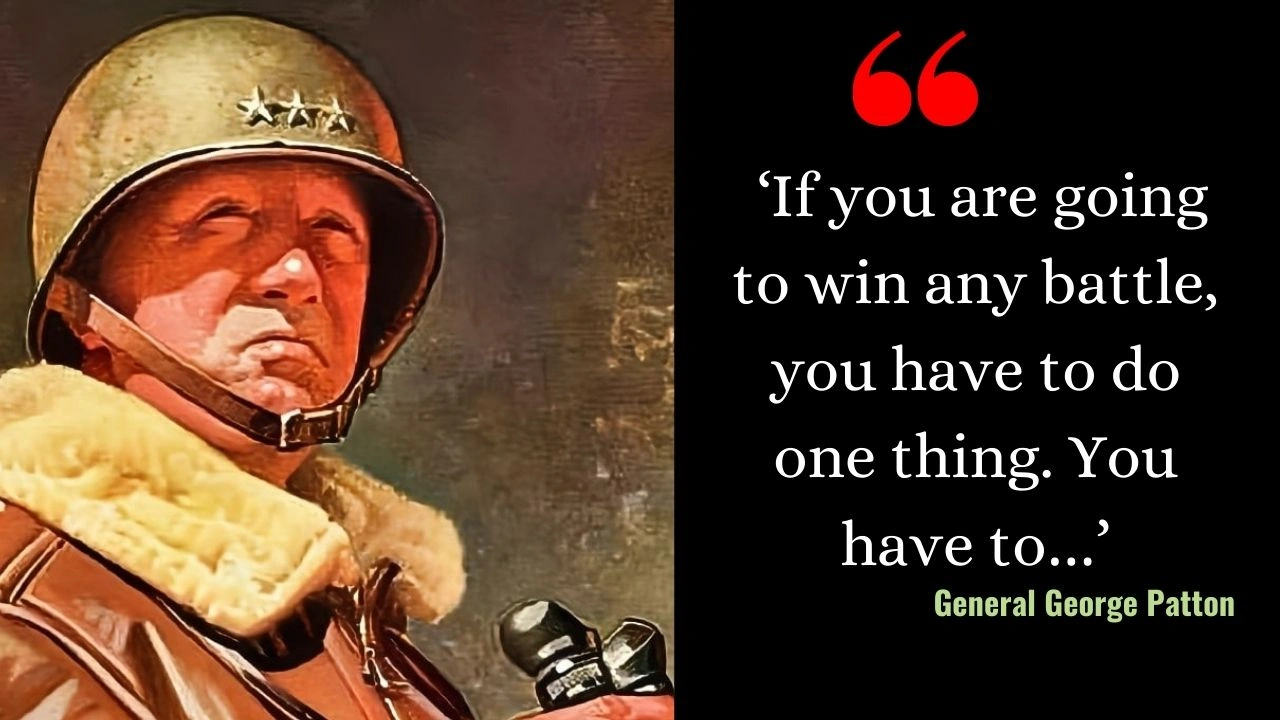
Army Quote of the Day by General George Patton has become one of the most powerful reminders of what true mental strength looks like. These words, rooted in the unforgiving reality of World War II, still motivate leaders, soldiers, athletes, and anyone who understands that real victory begins long before the physical battle starts. Army Quote of the Day by General George Patton gives us a window into how a legendary commander shaped his mindset, led his men, and made decisions during some of the hardest moments in military history.
This article explores the story behind the quote, how General George S. Patton lived by it during the Battle of the Bulge, and why his philosophy still carries weight today. You will also find key insights from modern leadership ideas, historical takeaways, and an overview table that highlights the most important parts of this topic.
Army Quote of the Day by General George Patton
The power of this quote lies in how directly it reflects Patton’s leadership style. He believed that if a person could control the mind, the body would follow even in unbearable conditions. This was not a theory for him. It was a rule he lived by every day during World War II. Patton understood that soldiers who relied only on physical strength would eventually fail, but soldiers trained to lead with mental discipline could push through fear, exhaustion, and chaos. That belief shaped how he trained troops, how he planned operations, and how he personally moved across the battlefield. His focus on mental readiness helped him pivot entire divisions, respond to unexpected attacks, and act decisively when others hesitated.

Overview Table
| Key Point | Summary |
| Quote Focus | The mind must lead the body during any battle or challenge |
| Leadership Style | Direct, fast moving, and mentally disciplined |
| Key Battle | Battle of the Bulge, winter 1944 |
| Strategic Move | Pivoted the Third Army in 48 hours |
| Result | Broke through to the 101st Airborne in Bastogne |
| Reputation | Only senior Allied general whose standing improved after the battle |
| Study Habits | Read history constantly to prepare for modern combat |
| Motivation Style | Led from the front and pushed soldiers to exceed limits |
| Core Message | Endurance and victory begin in the mind |
| Modern Relevance | Used today in sports, leadership, and personal development |
Patton’s “Mind Runs the Body” Rule and Why It Still Matters in Combat
Patton’s famous line about making the mind run the body captures the heart of military endurance. He believed that every soldier reaches a moment when the body feels done, but the mission still demands more. In those moments, mental strength becomes the deciding factor. During the Battle of the Bulge, Patton relied on this rule. The German attack caught many by surprise, but Patton had mentally prepared his staff and divisions for the possibility. His ability to think ahead allowed him to shift the Third Army north in record time. Snow, freezing temperatures, and rough terrain slowed nearly everyone, but Patton pushed his men through conditions that seemed impossible. His belief that the mind decides the outcome helped guide him through one of the hardest campaigns of the war.
A Reputation Enhanced
During the crisis meeting on December 19, 1944, many Allied leaders discussed what could be done in response to the German offensive. Patton stood out by confidently stating that he could begin a counterattack within 48 hours. Senior commanders were shocked because such a move required reorganizing more than 250,000 soldiers and hundreds of tanks. Patton delivered exactly what he promised. By December 26, the Third Army reached Bastogne and connected with the surrounded 101st Airborne Division. This achievement not only helped shift the outcome of the battle, but also strengthened Patton’s reputation. Many historians note that he was the only senior Allied general whose reputation rose as a result of the Battle of the Bulge.
How He Fought That Battle
Patton’s leadership style was different from many commanders. Instead of staying inside warm headquarters, he spent much of the battle in the field. His jeep moved across frozen roads, his face often red from the cold, and his trademark ivory handled pistol always at his side. Soldiers saw him near the action during some of the worst fighting. He encouraged, pushed, and sometimes loudly challenged his men because he believed strong leadership came from being present. His actions matched his words, which made his soldiers more willing to follow him even through terrible weather and constant enemy attacks.

Studying War
Patton was not only a battlefield commander. He was also a constant student of military history. He read books about ancient campaigns, modern wars, and the personal writings of generals from different eras. In 1943, he read about the Norman conquest of Sicily to understand how earlier armies fought on similar ground. He believed that history’s real purpose was to show how people react under pressure, not to list dates and events. Even during active campaigns, he kept studying. While fighting in the Saar region in 1945, he woke early one morning during a storm and read Rommel’s book because he wanted to understand how another commander handled similar weather challenges. This habit shaped his decision making and helped him connect past lessons to present problems.
The Quote
One of the most repeated messages from Patton is the line this article highlights: “If you are going to win any battle, you have to do one thing. You have to make the mind run the body.” The idea is simple and powerful. The body may feel tired, cold, or overwhelmed, but the mind can push through all of it if trained properly. Patton believed this deeply, and it shaped every part of his military career. He also believed America had a unique spirit for winning. In his famous 1944 speech, he said that Americans play to win and refuse to accept losing. This belief in mental strength and national confidence made his troops feel that victory was always within reach.
FAQs
1. Why is the Army Quote of the Day by General George Patton still popular today
People use it because it highlights the power of mental strength in everyday life, not only in war.

2. What made Patton’s leadership different
He led from the front, acted quickly, and pushed his soldiers through mental readiness rather than physical force alone.
3. How did Patton react during the Battle of the Bulge
He acted faster than expected, moved the Third Army north, and helped rescue the trapped 101st Airborne Division.
4. Did Patton study history to improve his leadership
Yes. He read military history constantly and used lessons from earlier commanders to make better decisions.
5. What is the main message behind Patton’s quote
The key message is that the mind controls endurance, decision making, and ultimately victory.