China’s tree planting: The story of China’s tree planting begins in the harsh winds of the north, where sand once swept across villages and farmland with little warning. People living along the expanding edges of the great deserts of China remember afternoons when the sky darkened and crops disappeared under drifting dunes. Life on this fragile land demanded resilience. Over the past three decades, that resilience has taken the shape of more than one billion trees planted across dry and damaged landscapes. The goal of China’s tree planting programs was not only to protect communities but to give the land a chance to breathe again.
This article explores how one of the largest ecological restoration projects in the world has unfolded, why it matters, and what the results look like today. From local planting efforts to wide scientific changes seen from above, we will break down the progress, the challenges, and the lessons that continue to shape this massive recovery effort.
China’s tree planting and its growing impact
The national push for China’s tree planting has become a symbol of determination. What started as a response to worsening sandstorms and shrinking farmland has grown into a coordinated effort supported by local communities, researchers, and national programs. The project aims to restore degraded land, reduce the force of desert winds, support rural livelihoods, and rebuild natural ecosystems that were stretched thin by decades of overuse. As the planted forests age and expand, researchers are beginning to measure long term improvements in soil quality, vegetation cover, and climate resilience. This section highlights how the initiative has shifted from early experiments to more refined and sustainable approaches that match local environments and long term ecological needs.

Overview Table
| Key Insight | Summary |
| Purpose of the project | Slow desert expansion and restore damaged land |
| Trees planted | More than one billion since the 1990s |
| Main regions impacted | Northern and northwestern provinces bordering major deserts |
| Vegetation recovery | Increased shrubs, grasses, and tree canopy cover |
| Reduction in sandstorms | Fewer severe sandstorms reaching cities like Beijing |
| Soil improvement | Growth in organic matter and stronger soil structure |
| Local involvement | Farmers, students, and volunteers take part in planting |
| Ecological benefits | Return of birds, insects, and native plant species |
| Challenges faced | Water limits, early monocultures, climate stress |
| Broader outcome | More stable landscapes and stronger rural resilience |
The Moment a Country Decided to Push Back
In the late twentieth century, northern China was reaching a breaking point. Sandstorms traveled farther each year. Land that once supported crops or grazing animals was drying out. Desert edges pushed into towns and fields. The issue was not isolated. It affected livelihoods, food production, air quality, and public health. National leaders recognized that waiting for conditions to improve was not an option. They committed to a long term plan to slow the advancing sand by planting trees, shrubs, and grasses across thousands of kilometers. This was the beginning of what would later be known as the Great Green Wall, a living barrier shaped plant by plant.
On the Ground, It Starts with a Shovel
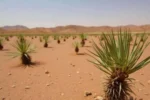
For all its scale, the project relies on simple tools and steady hands. In dry regions such as Inner Mongolia, planting is demanding work. Soil can crumble like powder. One strong wind can undo hours of effort. Planters dig pits designed to hold precious water, secure seedlings with straw or stones, and space plantings to help them withstand the climate. Villagers plant to protect their farms. Students plant during seasonal volunteer programs. Forestry teams monitor survival rates and adjust species choices year after year. The work is repetitive but deeply meaningful. Every seedling is a small act of hope for the land.
From Sand to Soil: Signs of Recovery
Although deserts do not retreat quickly, steady progress is visible. Satellite studies show greener surfaces where bare sand once dominated. Dunes that once moved each season have become more stable. In many regions near the Gobi and Tengger deserts, vegetation has started to reclaim land. Shrubs, grasses, and hardy native plants are especially effective at building early soil structure. Their roots capture moisture and organic matter, slowly turning loose sand into something more capable of supporting life. As the land heals, birds, insects, and small animals return. Residents speak of lighter winds and clearer skies compared to the worst decades.

What a Billion Trees Look Like from Above and Below
Viewed from space, the planted zones appear as expanding green patches stretching across northern China. These changes are measurable and documented by environmental researchers. On the ground, changes are more subtle. Soil scientists report deeper layers of organic material forming in restored areas. Microbial activity is increasing. Plant roots weave through sand that once held no structure at all. The forests and shrubs serve as carbon sinks, capturing carbon that would otherwise add to atmospheric warming. Although growth in arid climates is slow, the collective impact is significant.
Lessons Written in Bark and Sand
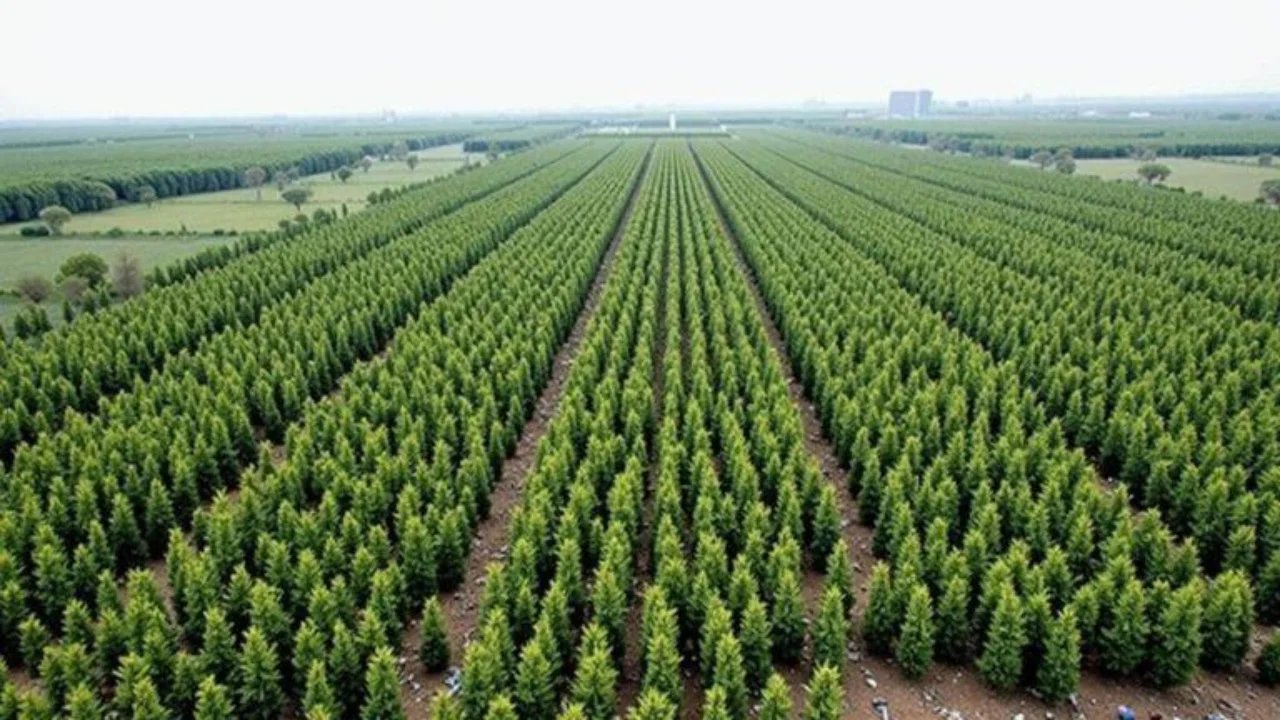
Early phases of the restoration relied heavily on fast growing species such as poplar. These created quick coverage but struggled to survive long term drought, pests, and the difficulty of the environment. This led ecologists to recommend more diverse plantings tailored to local ecosystems. Today, restoration programs emphasize mixed species planting, including shrubs and grasses that match local rainfall patterns. Water management has become a central part of planning. In some regions, tree planting has been scaled back in favor of grassland recovery to avoid stressing groundwater supplies. The focus is now on ecological balance, not just meeting planting targets.
People, Memory, and a Different Kind of Wall
For the people who have lived on the desert edge for generations, the changes are personal. Many remember seasons when sand crept into homes and fields disappeared. Today, young trees stand where only dunes existed. Children walk to school along newly planted paths. The landscape has not become lush, but it has become more stable and predictable. The Great Green Wall is not a solid barrier. It is a gradual shift from bare ground to life. For younger generations, these new forests are simply part of their world. For older generations, they represent survival, effort, and relief.

What the World Can Learn from a Billion Trees
Countries facing desertification and land degradation are studying China’s tree planting experience. The biggest lessons include the importance of matching species to climate, involving local communities, protecting water resources, and valuing diversity over uniform plantations. Successful restoration is slow, patient work. It comes from many small actions rather than one dramatic solution. China’s experience shows that damaged landscapes can recover when ecological principles are respected and communities are part of the process.
FAQs
Did China really plant more than one billion trees?
Yes. National restoration programs supported by communities and forestry teams have planted more than one billion trees since the 1990s to counter desert expansion.
Has the Great Green Wall reduced sandstorms?
Research indicates that severe sandstorms have decreased in frequency, especially in major cities, due to improved vegetation and land stability.

Is the project only focused on tree planting?
No. It includes shrubs, grasses, and native plants because these species help stabilize soil and support long term ecological recovery.
What challenges has the project faced?
Challenges include water shortages, early reliance on monocultures, climate pressures, and the difficulty of maintaining seedlings in harsh conditions.
Can other countries apply similar strategies?
Yes. Other nations can learn from China’s approach by tailoring restoration to local ecosystems, avoiding monocultures, and involving local communities.