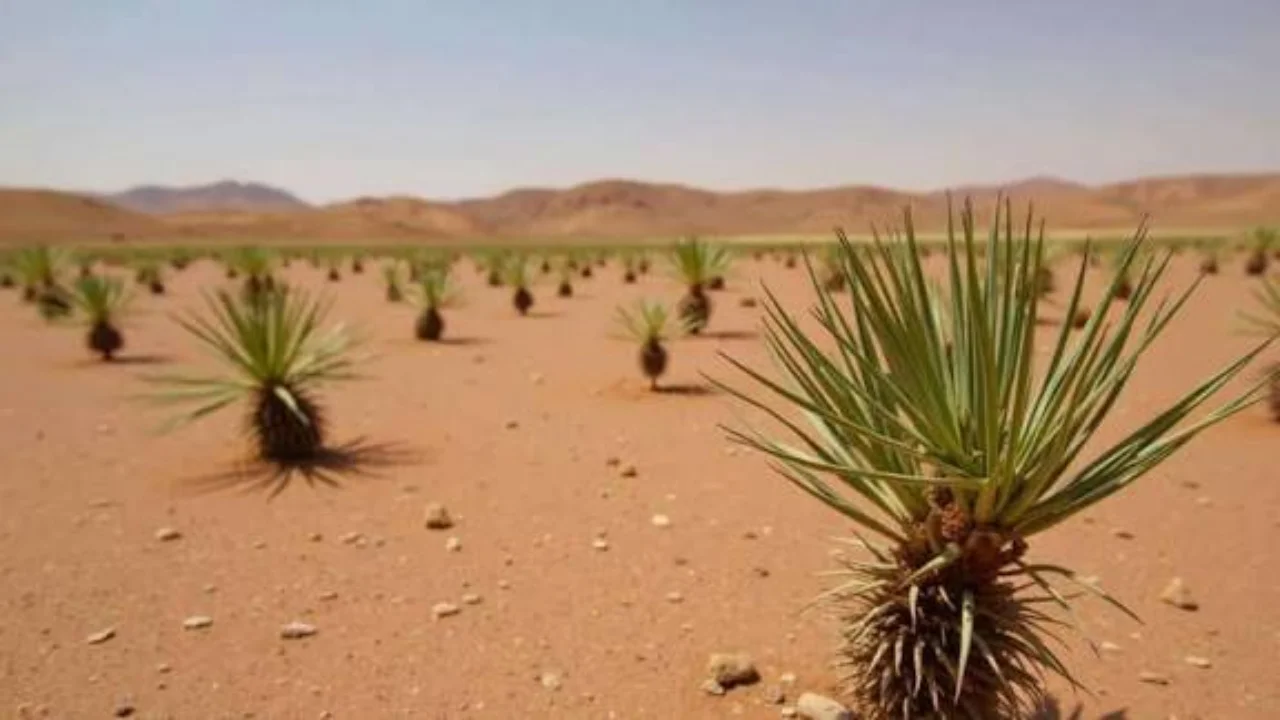
Focus on native plants: The first thing anyone notices when stepping into a recovering desert is not the heat but the quiet hum of life returning. What used to be bare stretches of drifting sand now carries the subtle sound of wind brushing past young shrubs and the faint buzz of insects settling into their new home. In several regions that were once considered lost to erosion, millions of seedlings have been placed into the ground with patience and hope. These efforts are showing that native plants are powerful allies in restoring damaged drylands and slowing the spread of barren land.
What is happening across these deserts is not a quick fix but a slow and steady reboot of entire ecosystems. The conversation around land recovery has shifted toward nature-based solutions, and in this narrative, native plants appear again and again as the strongest tool restoration teams have. This commentary explores how these plants work, why local communities are essential, and what these comeback stories teach all of us about rebuilding fragile landscapes.
Focus on native plants
Before any large-scale efforts begin, restoration workers spend time understanding the land because desert ecosystems require careful handling. Most modern restoration projects now rely heavily on native plants, and for good reason. These species have survived heat, drought, and salt-heavy soils for centuries. They know how to hold the ground together, slow the wind at the surface, and create tiny shaded pockets that help moisture stay in the soil longer. As more than five million of these plants have been reintroduced globally, the impacts have become measurable. Satellite images are now showing small yet undeniable patches of green appearing in places that were once blank stretches of beige. These signs prove that working with the species that already belong to a region gives the land a better chance of long-term recovery.
Overview Table
| Key Insight | What It Tells Us |
| Native species root deeply | Soil becomes stable and erosion slows |
| Moisture is captured more effectively | Better water retention improves survival |
| Small patches create habitat | Insects and birds return gradually |
| Local communities guide planting | Restoration becomes long-lasting |
| Test plots reduce failure | Only the strongest plants are scaled up |
| Basins and microcatchments help seedlings | Better survival in dry seasons |
| Nurse plants protect younger ones | Higher survival rates in harsh heat |
| Reduced dust improves local living | Cleaner air for nearby towns |
| Wildlife finds stepping stone areas | Gradual ecosystem rebuilding |
| Lessons apply outside deserts | Urban greening and farming benefit from desert knowledge |
When deserts stop spreading and start breathing again
When you walk through restored sections of northern Mexico or the Sahel region, the change is immediately noticeable. Years ago, the wind would lift sand into the air with nothing to stop it. Now those same winds meet small shrubs, tufts of grass, and young trees that break their force and trap the soil. It may not look dramatic to someone seeing it for the first time, but to residents who lived with constant dust, it feels like a new beginning.
Local observations match what restoration teams have recorded. Soil is no longer blowing into nearby communities. Moisture stays in the ground longer because plant roots hold onto it. Insects appear where none were seen for years, followed eventually by small birds. These returning species signal something important. The land is not reverting to a forest, but it is becoming functional again.
The patient art of rebooting an arid ecosystem
Desert recovery requires patience, and the people doing this work have learned that rushing the process often leads to failure. Early attempts used exotic trees that looked impressive at first but collapsed without constant irrigation. That lesson changed the approach entirely. Now teams choose only native plants and plant them using simple, time-tested techniques.

In southern Morocco, workers carve shallow basins into the ground so every drop of rainfall runs toward the roots instead of washing away. Some seedlings are planted in biodegradable pots. Others are protected by temporary fences until they grow strong enough to withstand grazing animals. It is slow and careful work, but after a few years, the results begin to speak for themselves. What starts as scattered twigs gradually becomes a patchwork of resilient vegetation.
What listening to the land really looks like
The restoration leaders often describe their work less like engineering and more like gardening. They talk to elders who remember where grass once grew, study old maps to trace vanished waterways, and walk the land to learn how wind shapes each slope. They also run controlled test plots, trying out different planting patterns and spacing before committing to larger areas.
This approach prevents large failures and makes room for the land to guide the process. It also creates trust with local communities, who are often the best stewards of these recovering areas. When they decide how to rotate grazing or when to collect native seeds, the restoration becomes woven into daily life rather than imposed from outside.

What this quiet desert comeback can teach all of us
Anyone walking through a restored desert patch will notice that the landscape still looks dry. The air is still hot and the sand still stretches far into the horizon. But the difference is in the small details. The soil feels firmer underfoot because roots are holding it together. A faint smell of herbs drifts through the wind as plants release their oils. A small lizard darts behind a shrub. Life is returning, piece by piece, and that slow recovery provides lessons for many other places facing environmental stress.
Cities are now planting drought-tolerant native plants in parks to handle record heat. Farmers in dry regions are digging basins similar to those used in desert restoration to capture more rainfall. Even someone with a balcony garden can support biodiversity by choosing local species. The message is clear. Working with the climate you have is more powerful than trying to fight against it.
Key lessons in list form
- Start with small test plots to learn what survives.
- Choose native species that already handle heat and drought well.
- Involve local communities in the planning and care.
- Use simple structures like basins to help young plants survive.
- Expect slow progress because long-lasting recovery takes time.
FAQs
Are millions of plants enough to make a difference in big deserts?
Yes. When planted in strategic zones, millions of native plants can stabilize large areas of soil and reduce dust, even if they do not transform the entire desert.

Why not plant fast-growing trees instead of native species?
Fast-growing trees often collapse without irrigation. Native species survive naturally and support healthier ecosystems.
Does restoration turn deserts into forests?
No. Restoration helps deserts function better without trying to erase them.
How long until visible results appear?
Many areas show small signs of life within two to three years, while fuller vegetation takes closer to ten.

Can someone far from deserts contribute?
Supporting restoration groups, sharing success stories, or planting local species at home are all meaningful ways to help.