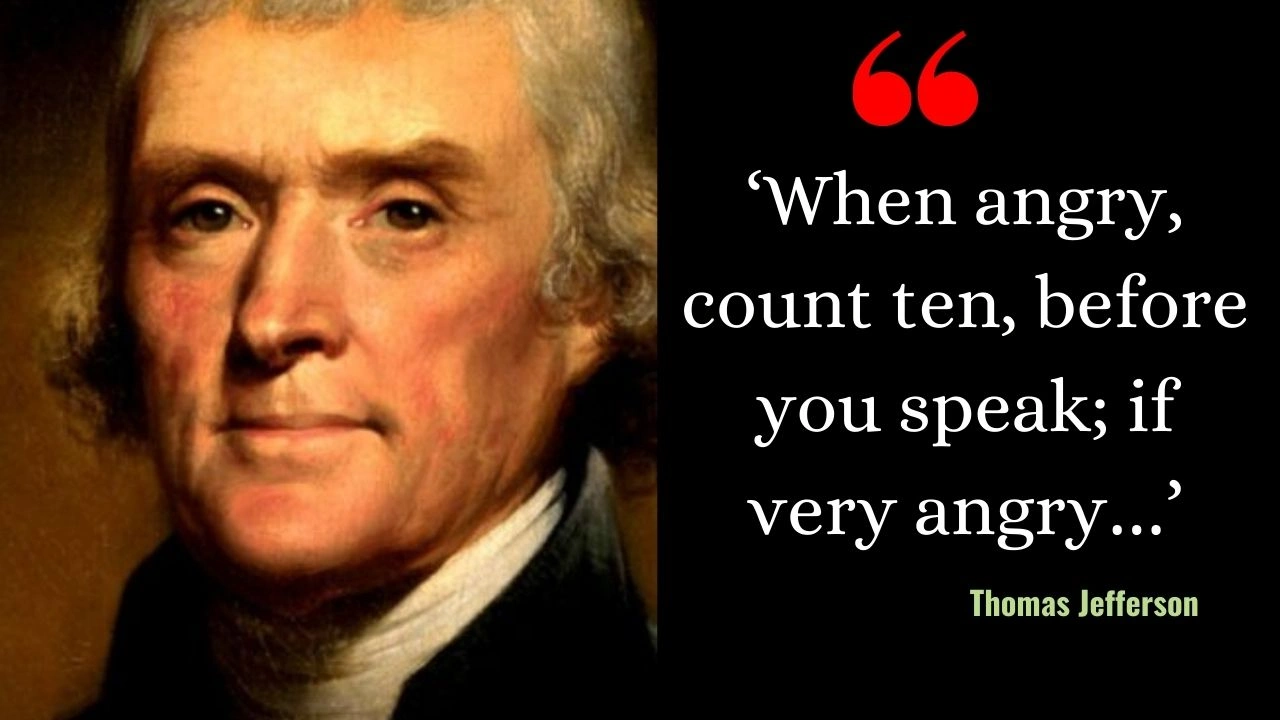
Life Advice Quote of the Day by Thomas Jefferson still feels surprisingly modern, even though it was written in 1825. This simple piece of wisdom reminds readers that pausing before reacting can completely change the outcome of an emotional moment. Life Advice Quote of the Day by Thomas Jefferson sets the tone for understanding how a few calm seconds can prevent regret and help a person speak with clarity instead of anger.
In this article, we take a closer look at the meaning behind the quote, the story of why Thomas Jefferson shared it, and how it fits into the other life lessons he passed down. We also explore the role he played in shaping the United States, including his central place in writing the Declaration of Independence. Everything you will read here is designed to give you a clear, friendly, and complete understanding of the topic.
Life Advice Quote of the Day by Thomas Jefferson
The focus keyword Life Advice Quote of the Day by Thomas Jefferson points to a line that he included in a heartfelt letter to a young man named Thomas Jefferson Smith. Jefferson wrote that when a person is angry, counting to ten gives the mind time to cool down. When a person is very angry, counting to one hundred gives enough space to regain control. This advice came near the end of Jefferson’s life, which makes it feel even more meaningful. He wanted the young man to avoid trouble by learning to pause, choose calm over impulse, and stay steady under pressure. This quote has lasted because it applies to any generation and continues to guide people toward better emotional decisions.
Overview Table
| Topic | Details |
| Source of Quote | Letter written by Jefferson on February 21, 1825 |
| Recipient | Thomas Jefferson Smith, a young man named after Jefferson |
| Purpose | To offer a list of practical rules for daily life |
| Famous Rule | Count to ten before speaking in anger |
| Extra Rule | Count to one hundred if very angry |
| Number of Rules | Ten total, called a Decalogue of Canons |
| Tone of Letter | Written with awareness of Jefferson’s late-life stage |
| Additional Teachings | Money habits, responsibility, self-control |
| Historical Context | Written about 17 months before Jefferson passed away |
| Key Theme | Calm thinking leads to wiser choices |
Thomas Jefferson’s “Count to Ten” Rule Was Late-Life Advice And It Still Works
Jefferson’s guidance about controlling anger came from his tenth rule, which encouraged slowing down before speaking. He believed that strong emotions often lead to mistakes, and pausing allows the mind to reset. This simple habit of counting is backed by modern psychology, which shows that a short pause reduces stress and prevents impulsive reactions. Jefferson understood this long before these studies existed.

The letter also hinted at Jefferson’s awareness of his age. He wrote that the message might feel like words from someone who was already gone by the time the young man read them. This gives the quote emotional weight and shows how much he valued passing down wisdom that could outlive him.
A Decalogue of Canons for Observation in Practical Life
Before giving the advice to count to ten, Jefferson listed nine other rules for building a strong and responsible life. Some of his lessons focused on time management. He warned not to put off what can be done today and not to rely on others for tasks a person can do alone. Other rules focused on money, self-discipline, and attitude. He advised avoiding debt, resisting useless purchases, and remembering that pride is more costly than hunger or cold.
He also encouraged moderate eating, willing effort, and remembering that many worries come from things that never happen. The final rule urged readers to take things by their “smooth handle,” meaning to approach problems with calmness and patience. Together, these rules show a life philosophy built on steadiness, responsibility, and emotional balance.
Some More Famous Thomas Jefferson Writings
Long before Jefferson wrote his Decalogue, he became the principal author of a document that shaped the United States. In 1776, a Committee of Five was formed to prepare a statement explaining the colonies’ need for independence. Jefferson was chosen to draft it. He shared the first version with John Adams and Benjamin Franklin for feedback. They made a few changes, and the revised version was then passed to Congress.

Debates continued for two days, but the structure of the work remained Jefferson’s. On July 4, Congress adopted the final version. From that moment, the Declaration became a symbol of freedom and the starting point of a new nation.
The Structure of the Declaration
Jefferson designed the Declaration with clarity and purpose. It included an introduction, a preamble, two main sections that explained the grievances against the British crown, and a conclusion stating the colonies’ right to independence. This structure helped the document communicate both logic and emotion, making it powerful enough to unite the colonies at a critical moment in history.
Even after adoption, the work of the Committee of Five was not finished. They supervised the printing of the official copies. These early printed sheets were sent across the colonies so leaders and citizens could understand the bold decision that had been made.
How the Declaration Was Printed and Shared
The first printed copies came from the shop of John Dunlap, the printer for Congress. These sheets, now called Dunlap broadsides, were distributed on July 5. They went to assemblies, committees, and military leaders, including George Washington, who would lead the Continental Army during the Revolution.

By July 9, all thirteen colonies had approved the Declaration. A final handwritten parchment was prepared, and members of Congress signed it. The signature of John Hancock, written in large letters, became one of the most famous parts of the document.
The Physical Journey of the Declaration
Over the next two centuries, the parchment version of the Declaration experienced aging, travel, and careful preservation efforts. It was moved several times during wars and periods of uncertainty to keep it safe. Preservation experts worked to slow the natural aging of the parchment while ensuring that future generations could still read and study it. This long journey reflects the value that the country placed on protecting its founding document.
FAQs
Why is the Life Advice Quote of the Day by Thomas Jefferson still popular today?
Because it offers simple emotional guidance that helps people avoid rash decisions.
What was Jefferson trying to teach with his rule on anger?
He wanted readers to pause before reacting so they could speak with clarity instead of frustration.
Who received the original letter?
It was sent to a young man named Thomas Jefferson Smith at the request of his father.
Did Jefferson include other advice in the letter?
Yes, he listed nine additional rules that focused on responsibility, money management, and self-control.
How does this quote relate to Jefferson’s larger legacy?
It reflects his belief in calm thinking, which also shaped his work while writing the Declaration.