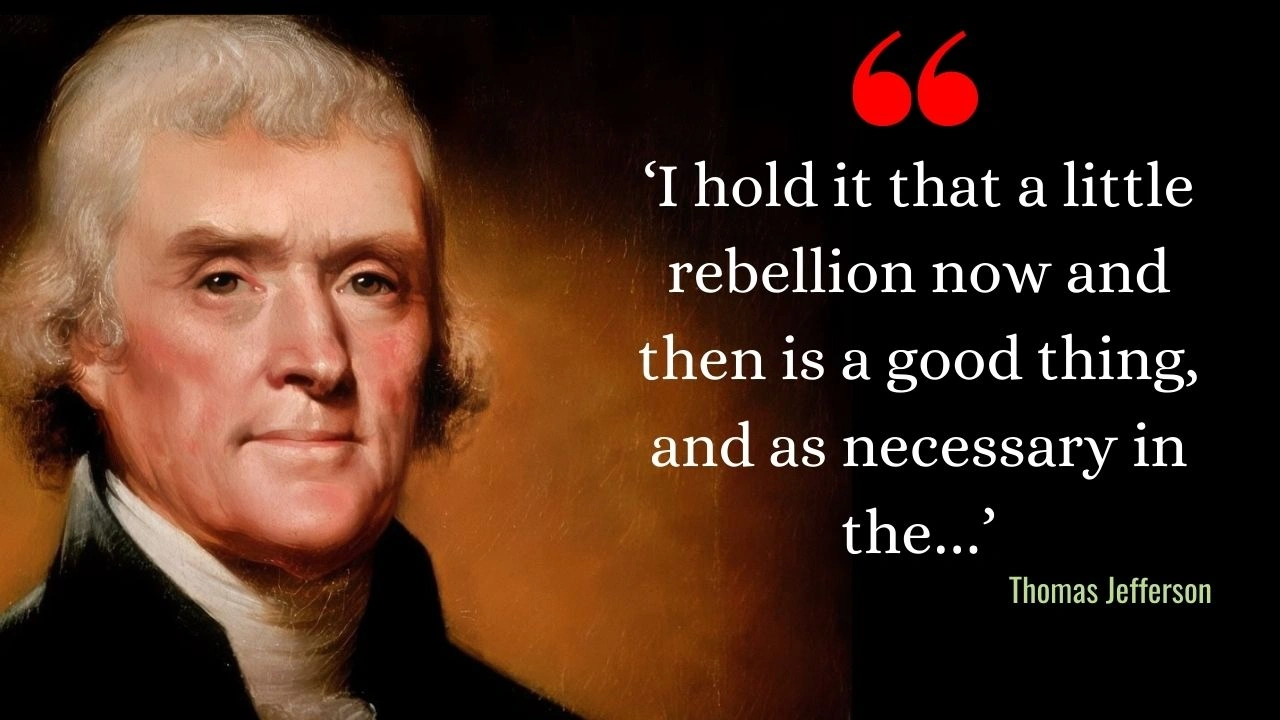
Quote of the Day by Thomas Jefferson has been repeated for generations because it still sparks strong reactions. The line feels bold, honest, and surprisingly relevant to the way people talk about government and public voice today. When Jefferson wrote it in 1787, he wanted leaders to remember that citizens must be able to question authority and push back when needed. His message still speaks to readers who want to understand how freedom, responsibility, and civic action fit together.
In this article, the Quote of the Day by Thomas Jefferson is used as a guide to explore his ideas, the letter that inspired the quote, and why these words continue to show up in modern political debates. You will find clear explanations, updated context, and easy to understand insights that help connect Jefferson’s past to present day conversations about unrest, leadership, and public expression.
Quote of the Day by Thomas Jefferson
This section offers a simple but complete look at the focus keyword, including what it means, why it matters today, and how Jefferson shaped political thought through his personal experiences and beliefs. The phrase has become a meaningful reference for people trying to understand the relationship between citizens and government. Jefferson argued that occasional resistance can protect freedom, and this idea keeps appearing in discussions about democracy, protest movements, and leadership accountability. By breaking down the meaning behind the words and placing them in the world Jefferson lived in, readers can see why the quote continues to gain attention and how it fits into broader conversations about civic responsibility, political unrest, and the tension between authority and individual rights.
Overview Table
| Topic | Summary |
| Source of the Quote | Letter written on January 30, 1787 |
| Recipient of the Letter | James Madison |
| Main Purpose | To show why occasional unrest protects public rights |
| Jefferson’s Location | Paris while serving as minister to France |
| His Larger Belief | Government must not fear honest criticism |
| Related Historical Moment | Early tensions before the French Revolution |
| Jefferson’s Role in History | Author of the Declaration of Independence |
| Major Public Office | Third President of the United States |
| Modern Use of the Quote | Referenced in Tea Party era and Capitol discussions |
| Lasting Impact | Continues to guide debates about protest and freedom |
The Story Behind Jefferson’s “Little Rebellion” Line
Jefferson’s quote came from a thoughtful letter sent to Madison when he lived in Paris. In it, he compared political unrest to storms in nature. Storms may seem disruptive, but they also clear the atmosphere. To Jefferson, the same was true in society. When people protest or push back, they remind leaders that power must serve the public. He warned that severe punishments could silence valid concerns and weaken the purpose of a democratic system.
This idea was shaped by what Jefferson witnessed in Europe and remembered from the American Revolution. He believed that healthy government depends on honest feedback, even when that feedback arrives in uncomfortable ways.
Jefferson’s Life and Early Influences
Jefferson was born in 1743 and grew up with a strong interest in learning. He studied mathematics, languages, and law before beginning his public life. His education at the College of William and Mary helped shape his views on reason, justice, and individual rights. These early lessons became the foundation of his political thinking.
He built Monticello, where he spent much of his life studying, writing, and managing daily work. Modern accounts openly address his ownership of enslaved individuals, which remains a central part of understanding his legacy today.
Author of the Declaration of Independence
Jefferson’s most famous work, the Declaration of Independence, explained that rights come from a creator rather than from government. This belief strongly influenced the Quote of the Day by Thomas Jefferson because both ideas focus on protecting people from unnecessary control. Jefferson argued that when government fails to honor those natural rights, citizens are justified in expressing their dissatisfaction.
His political writing helped shape the identity of the new nation and continues to be studied around the world.
Diplomacy in France
In 1784 Jefferson traveled to France to serve in several diplomatic roles, eventually taking the position once held by Benjamin Franklin. During these years, he explored European culture, collected scientific tools and books, and communicated with American leaders about global politics and trade.
His time in Paris exposed him to early warnings of the French Revolution. These experiences shaped his thinking about the relationship between citizens and authority, leading directly to the letter that included the famous quote.
Rise in American Government
After returning to the United States, Jefferson became the first Secretary of State under George Washington. Later he served as vice president under John Adams. In 1800, he was elected the third President of the United States.
During his presidency, he authorized the purchase of the Louisiana Territory, which expanded the nation in a historic way. He also supported the Lewis and Clark expedition, which helped map the new territory and increase knowledge of the region’s geography.
Jefferson’s Final Years
After two terms as president, Jefferson returned to Monticello. He sold his large personal library to help rebuild the Library of Congress and then began collecting new books once again. His later years were centered on reading, writing, and reflecting on the country he helped build.
Jefferson passed away on July 4, 1826, the fiftieth anniversary of the Declaration of Independence, on the same day as Adams.
How Jefferson’s Quote Shaped Later Politics
The Quote of the Day by Thomas Jefferson has resurfaced in many debates about protest and civic expression. During the Tea Party era, it became a reference point for groups that believed government needed stronger limits. Writers discussing the events at the United States Capitol also revisited Jefferson’s ideas, questioning how he might respond to modern unrest.
Some argue Jefferson would support public resistance if the cause were just, while others point out that he rejected senseless or misinformed violence. This ongoing debate shows why his words still matter.
Key Points About Jefferson’s Rebellion Quote
• Jefferson believed occasional unrest protects public freedom
• He felt mild responses from government keep criticism alive
FAQs
Why does Jefferson’s quote still matter today?
It highlights the importance of public voice and reminds readers that government must be accountable to the people it serves.
What was Jefferson trying to express in his letter to Madison?
He wanted to explain that small rebellions can prevent government from becoming overly strict or disconnected from citizens.
How is the quote used in modern politics?
It is often cited in conversations about protest movements, civic rights, and government authority.
Did Jefferson support violent uprisings?
He supported the idea of civic pressure but did not encourage violence without a meaningful reason.
What shaped Jefferson’s belief about rebellion and government?
His experience with the American Revolution and what he observed in Europe both played major roles.