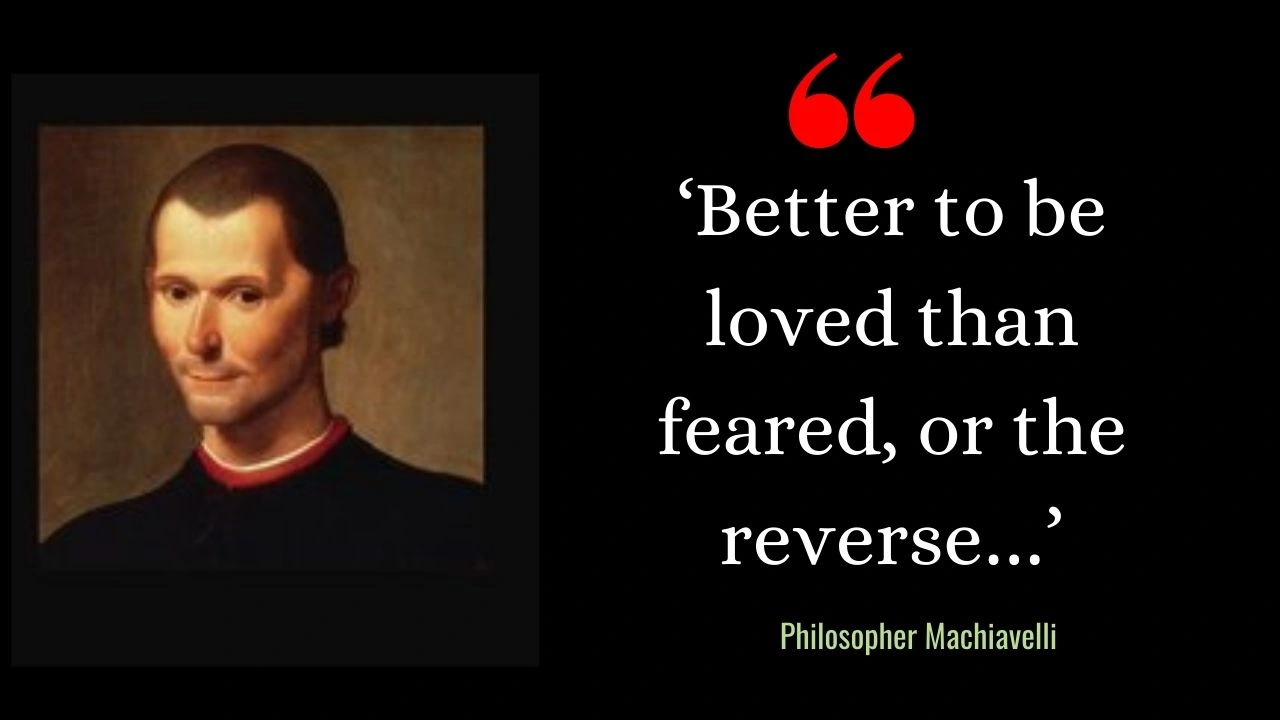
Quote of the Day By Philosopher Machiavelli has become one of the most talked about ideas in leadership and political thought. It opens with a powerful question about whether leaders gain more stability through love or fear. This topic continues to attract readers because it relates to how leaders make decisions, protect their authority, and understand human behavior. The Quote of the Day By Philosopher Machiavelli invites us to explore what really keeps a ruler safe when the world becomes uncertain.
This article gives a clear look at what the quote means, why it matters, and how Machiavelli’s real-life experience shaped his thinking. You will see how his ideas grew from years spent in diplomacy, political struggles in Florence, and his close observation of the powerful figures of his time. The goal here is to break down his message in a simple, human tone without losing the depth that makes his work so enduring.
Quote of the Day By Philosopher Machiavelli
The Quote of the Day By Philosopher Machiavelli captures the heart of his political philosophy. He believed that love is ideal, but fear often provides more security when leaders must choose between the two. This idea grew from observing how quickly loyalty can shift when times are difficult. Machiavelli suggested that a leader who depends only on affection may be vulnerable, while a leader who understands how to use fear responsibly can maintain stability. This section sets the foundation for understanding his worldview, especially his belief that human nature is unpredictable and that power must be protected with both wisdom and strength.
Overview Table
| Key Topic | Summary |
| Origin of the Quote | Chapter 17 of The Prince |
| Main Argument | Fear provides stronger security than love |
| Leadership Focus | Stability, control, and human behavior |
| Political Theory | Classical realism rooted in power |
| Human Nature View | People change loyalty when pressured |
| Moral Contrast | Opposes moral leadership ideas like Confucianism |
| Historical Influence | Inspired by diplomatic work in Florence |
| Major Figure Observed | Influence of Cesare Borgia’s leadership style |
| Military Insight | Preferred citizen militias over mercenaries |
| Modern Impact | Used in leadership, politics, and strategy today |
The First National Security Advisor
Machiavelli is often described as one of the earliest thinkers to outline what we now consider national security strategy. In his time working for the government of Florence, he saw firsthand how threats, rivalries, and shifting alliances shaped the responsibilities of leaders. His observations became the backbone of The Prince. Many modern scholars describe him as a political strategist because he focused on practical solutions rather than idealistic theories. His advice was designed to help leaders survive political turmoil, protect their state, and act with clarity when faced with uncertainty.
A Classical Realist
Machiavelli is remembered as one of the earliest classical realists. He believed that power is the force that drives political decisions. According to him, rulers must always work to strengthen their position, prevent rebellion, and maintain control. His realist view was simple and direct. He wrote that leaders cannot rely only on good intentions. They must also understand that fear can create stronger obedience when people are unpredictable. This belief explains why he argued that fear provides more security than love in times of crisis.
The Anti-Confucius
Unlike Confucian philosophy, which encourages leadership based on virtue and moral goodness, Machiavelli believed that rulers must sometimes make difficult choices that do not appear moral. He argued that moral leadership does not always keep a state safe. Stability often requires discipline and strong decision making. For Machiavelli, love can fade when danger appears, but fear, when used with balance, helps maintain order. This contrast between moral leadership and practical leadership is one reason his ideas remain widely debated.
Anarchical System of Foreign Affairs
Machiavelli believed that the world operates without a single authority controlling all states. Each city-state or nation acts in its own interest and must protect itself. With no global authority to enforce peace, rulers must rely on strategy, strength, and careful planning. This competitive environment helps explain why Machiavelli saw fear as more reliable than love. Love can disappear when circumstances change, but fear creates a consistent form of obedience that helps leaders navigate an unpredictable world.
Evil Could Be Part of Power
Machiavelli introduced the idea of virtu, which reflects a leader’s ability to make strong, effective decisions. He believed that rulers may sometimes need to take actions that seem harsh in order to protect their state. Cruelty, when used wisely, can prevent greater problems. His point was not that leaders should be violent, but that they must understand reality instead of relying only on kindness. In his view, people often act in their own interest. Fear helps prevent disloyalty when love alone is not enough to maintain order.
A Brief Biography
Machiavelli was born in May 1469 in Florence. His early education under Paolo da Ronciglione shaped his skill in writing and persuasion. These abilities helped him enter government work, where he handled official documents and quickly gained influence. His exposure to political affairs taught him how leaders negotiate, how they manage conflict, and how they respond to threats. These lessons formed the foundation for his later writings on power and leadership.
First Real Position of Influence
He eventually became secretary of the council responsible for diplomacy and defense in Florence. During this time, he closely observed the leadership style of Cesare Borgia. Borgia’s strong and decisive actions deeply influenced Machiavelli. He noticed how Borgia controlled rebellion, protected his rule, and acted in self-interest to remain in power. These observations shaped Machiavelli’s belief that stability often depends on firm leadership rather than kindness.
The Power Behind the Pope
Machiavelli served as a diplomat in the Holy See in 1500. This role gave him direct insight into how leaders make difficult choices. He interacted with major political figures and saw the complexities of governing through alliances, negotiations, and military pressure. These experiences strengthened the ideas he later wrote in The Prince, including his belief that fear is often more dependable than love.
A General With a Mixed Record
Machiavelli experimented with forming a citizen militia in Florence because he believed ordinary citizens would be more loyal than paid mercenaries. The militia won early victories but eventually lost against forces supported by the Medici family. This defeat led to Machiavelli’s exile. During this quiet period, he wrote down the insights that would become his lasting contribution to political philosophy.
His Legacy Is Intact
Machiavelli’s teachings continue to influence leaders, universities, and even popular culture. His ideas appear in discussions about politics, business strategy, leadership, and power. People study him because he understood how human behavior affects authority. The Quote of the Day By Philosopher Machiavelli remains relevant because it explains the difficult choices leaders face when trying to protect what they have built.
FAQs
Why does Machiavelli believe fear offers more security than love?
He believed fear creates more consistent obedience because human loyalty changes quickly during difficult times.
Did Machiavelli discourage leaders from being loved?
No. He said both love and fear are ideal together, but fear is safer when a leader must choose only one.
Is Machiavelli’s view still used today?
Yes. His ideas appear in political science, leadership training, and strategic planning.
Did his real experience influence The Prince?
His diplomatic and military work shaped many of the lessons in the book.
Does his quote apply outside politics?
Many people apply his ideas to leadership, management, and decision making in modern organizations.